

Why Is My Heating Bill Suddenly So High?
Did your latest gas or electric bill make you wonder whether someone secretly started heating the driveway?
A higher heating bill is normal when temperatures drop, especially during an Illinois winter. But if your energy costs jump sharply compared with similar weather last year, your HVAC system may be using more energy than it should.
For homeowners and businesses in Lemont, Homer Glen, Lockport, Romeoville, Bolingbrook, Orland Park, Mokena, Plainfield, Naperville, and Woodridge, cold weather puts serious demand on heating equipment. Small airflow, maintenance, thermostat, or equipment problems can become much more noticeable once the furnace starts running for hours every day.
Below are the most common reasons heating costs rise, what you can safely check yourself, and when professional HVAC service makes sense.
Why a Rising Heating Bill Matters
Your heating bill is not just a number on a utility statement.
A sudden increase can be an early warning that your furnace, heat pump, ductwork, thermostat, or building envelope is making the system work harder than necessary.
That extra workload can lead to:
- Higher monthly utility costs
- Longer heating cycles
- Uneven temperatures
- Poor airflow
- Excessive equipment wear
- More frequent repairs
- Reduced comfort
- Premature HVAC replacement
The U.S. Department of Energy notes that heating and cooling are among the largest energy uses in a typical home. Improving maintenance, thermostat settings, insulation, and air sealing can reduce unnecessary energy consumption. U.S. Department of Energy guidance on home energy efficiency
This matters even more during Chicago-area cold spells.
A minor efficiency problem in October may barely affect your bill. The same problem in January, when your heating system is operating much longer, can become expensive very quickly.
For commercial buildings, the impact can be larger because rooftop units and heating systems may operate for extended hours across multiple zones.
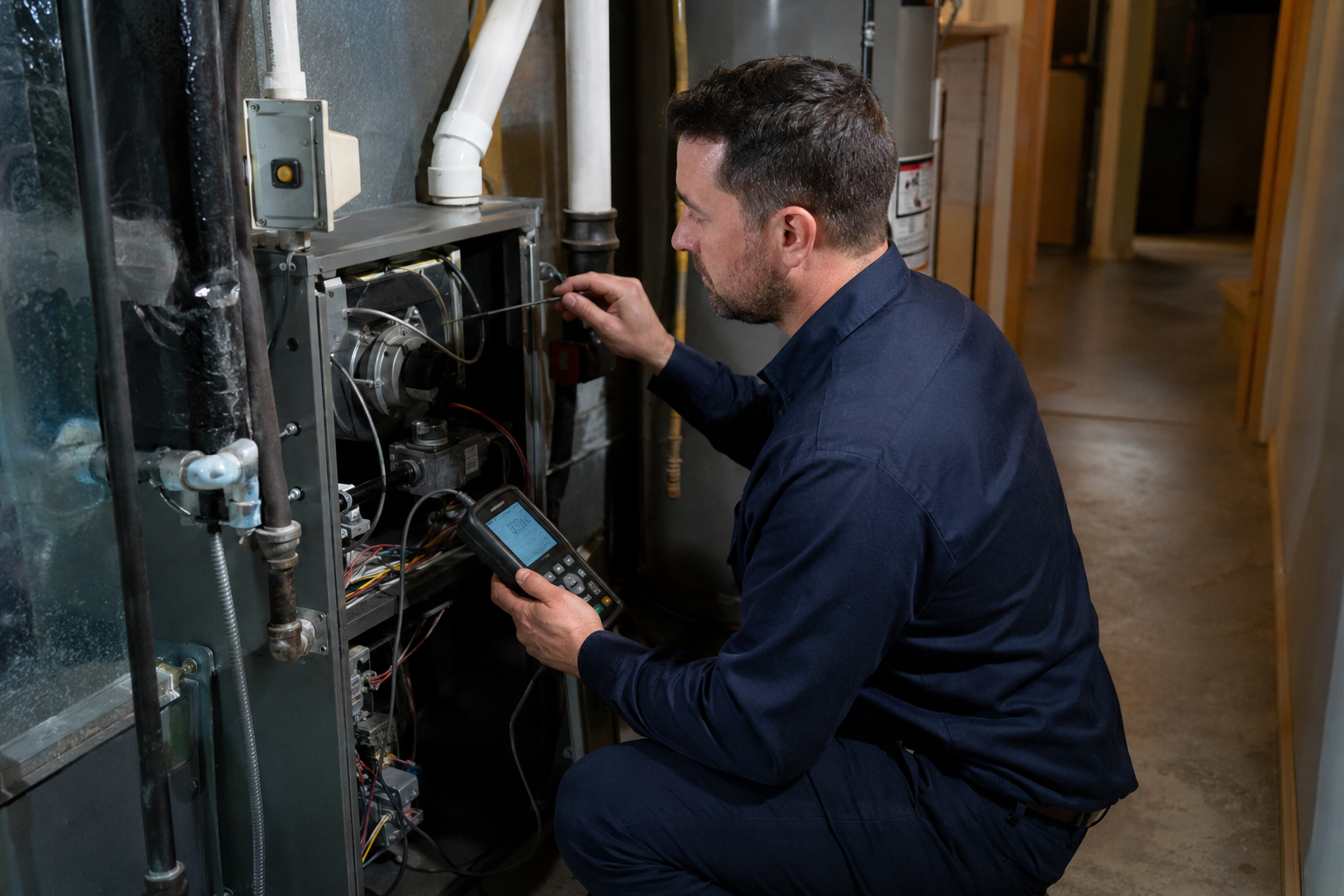
Image Placement #1
Suggested image: HVAC technician inspecting a residential furnace while reviewing system performance and airflow.
Alt text: Heating bill increase caused by inefficient furnace operation in Lemont IL
Heating Bill — What Homeowners Need to Know
Before assuming your furnace is broken, compare your current bill carefully.
Ask yourself:
- Was this month significantly colder than last year?
- Did the utility rate increase?
- Have thermostat settings changed?
- Are you heating more rooms than before?
- Has someone been home more often?
- Is the system running longer?
- Does the house feel colder despite higher energy use?
If energy consumption has increased without an obvious lifestyle or weather-related reason, the HVAC system deserves a closer look.
Common Signs and Warning Signals
A high heating bill often appears with other symptoms.
Watch for:
- Furnace running almost constantly
- Heating cycles that last much longer than before
- Frequent furnace cycling
- Weak airflow
- Cold rooms
- Uneven temperatures between floors
- New furnace noises
- Burning or unusual odors
- Thermostat struggling to maintain the set temperature
- Utility bills climbing month after month
If your furnace repeatedly turns on and off every few minutes, read Salmark HVAC’s guide to furnace short cycling and frequent furnace shutdowns.
If the furnace is running but delivering cold air, the issue may involve airflow, thermostat settings, ignition, or overheating. Salmark also explains the common causes of a furnace blowing cold air.
Common Causes of a High Heating Bill
1. Colder Outdoor Temperatures
Sometimes the simplest answer is the correct one.
When temperatures drop, your home loses heat faster. Your furnace must operate longer to replace that heat.
A colder month can therefore increase your bill even if the heating system is working normally.
Compare actual energy usage, not only the dollar amount. Utility rates can change, so a higher bill does not always mean your furnace used dramatically more fuel.
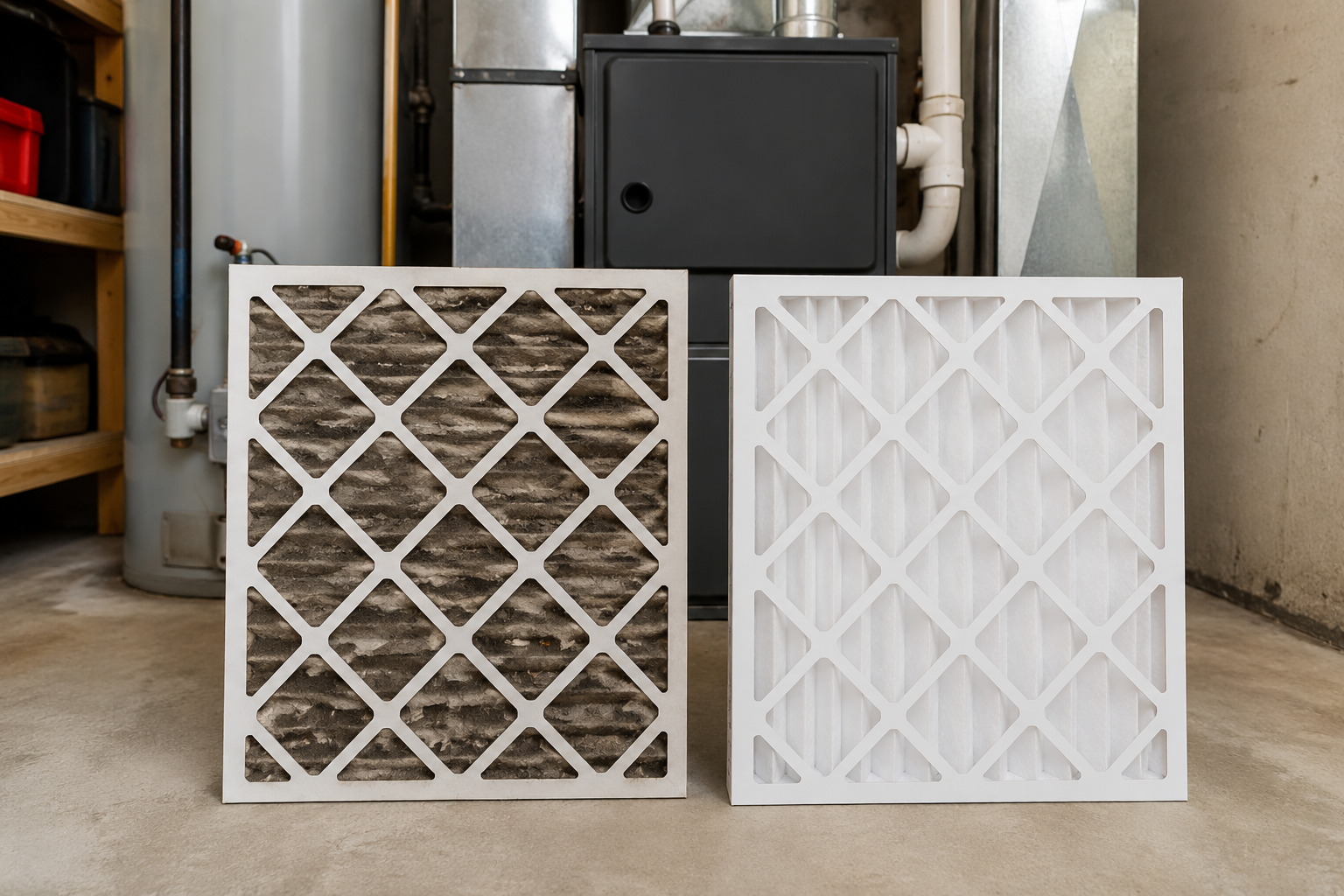
2. Dirty Furnace Filter
A dirty filter restricts airflow.
When your furnace cannot move enough air, it may need to run longer to heat the home. Restricted airflow can also increase equipment stress and contribute to overheating or short cycling.
ENERGY STAR recommends inspecting, cleaning, or changing HVAC filters regularly and notes that dirty filters can increase energy costs and contribute to early equipment failure. ENERGY STAR HVAC maintenance checklist
During peak heating season, check the filter more frequently.
Homes with pets, renovation dust, smokers, or high indoor particle levels may require more frequent filter changes.
3. Thermostat Settings Changed
A few degrees can make a meaningful difference over an entire heating season.
If your thermostat was previously set to 68°F and is now regularly set to 73°F, your furnace has to replace more heat every hour.
The Department of Energy recommends adjusting thermostat settings while sleeping or away from home to reduce unnecessary heating demand. DOE winter energy-saving tips
Programmable or smart thermostats can help automate temperature changes.
However, a thermostat that is malfunctioning or poorly positioned can also create problems.
For example, a thermostat near a drafty doorway may read colder than the rest of the house and keep the furnace running unnecessarily.
4. Air Leaks Around Windows and Doors
Your furnace may be working perfectly while your house is losing heat.
Air can escape through:
- Window gaps
- Exterior doors
- Attic penetrations
- Basement openings
- Poorly sealed wall penetrations
- Gaps around plumbing or electrical openings
The Department of Energy explains that reducing air leaks can improve comfort and lower heating and cooling costs. DOE air-sealing guidance
If certain rooms always feel drafty, the problem may not be the furnace itself.
5. Duct Leakage or Restricted Ductwork
Your furnace produces heat, but the duct system has to deliver it.
Leaks, disconnected ducts, crushed sections, poor insulation, or damaged ductwork can allow heated air to escape before reaching occupied rooms.
The DOE notes that significant conditioned air can be lost through leaking or poorly connected duct systems. Department of Energy home upgrade guidance on duct sealing
Duct problems may also create:
- Weak airflow
- Hot and cold rooms
- Long heating cycles
- Excessive furnace operation
- Higher utility costs
If your home has recurring airflow problems, Salmark HVAC provides residential and commercial HVAC services that include system diagnostics, heating, cooling, ductless equipment, and commercial systems.
6. Furnace Needs Maintenance
Dust, worn parts, dirty burners, blower problems, and poor airflow can reduce furnace performance.
A furnace may still heat your home while operating less efficiently than it did a year ago.
That is why preventive maintenance matters.
A heating inspection can identify issues such as:
- Dirty burners
- Blower performance problems
- Electrical connection issues
- Thermostat problems
- Airflow restrictions
- Safety-control problems
- Unusual cycling
ENERGY STAR recommends a professional heating-system check before the heating season rather than waiting until equipment is under maximum winter demand. ENERGY STAR seasonal HVAC maintenance recommendations
7. Aging Heating Equipment
Older furnaces can become more expensive to operate as components wear.
That does not mean every older furnace should be replaced.
A properly maintained older system may still be reasonable to repair, especially if the problem is minor.
However, replacement may make more sense when:
- Repairs happen repeatedly
- Major components are failing
- Energy costs remain unusually high
- Comfort problems continue
- Equipment is poorly sized
- The furnace requires expensive repairs
- Efficiency is significantly lower than modern equipment
The Department of Energy emphasizes that proper sizing and installation are important for furnace efficiency and operating cost. DOE guidance on energy-efficient residential furnaces
Repair vs. Replacement
A high heating bill alone is not enough reason to replace your furnace.
Repair often makes sense when:
- The system is otherwise reliable
- The issue is caused by a serviceable component
- The repair cost is reasonable
- The furnace has been maintained
- Energy consumption increased suddenly rather than gradually
Replacement may deserve consideration when:
- The furnace breaks down frequently
- Heating costs remain consistently high
- The system cannot maintain comfort
- Major components are failing
- Equipment is incorrectly sized
- The system is near the end of its practical service life
Salmark HVAC services furnaces, central AC systems, heat pumps, ductless systems, rooftop units, water heaters, and commercial HVAC equipment throughout Chicagoland. Explore Salmark HVAC services
The right decision should be based on equipment condition, repair history, efficiency, and long-term cost rather than age alone.
Prevention and Maintenance Tips
A few simple habits can help reduce heating costs.
Start with these:
- Check your furnace filter every month during heavy use.
- Keep return vents open and unobstructed.
- Avoid closing multiple supply registers.
- Use reasonable thermostat settings.
- Lower the thermostat when the building is unoccupied.
- Check windows and exterior doors for drafts.
- Pay attention to longer-than-normal heating cycles.
- Schedule annual furnace maintenance.
- Repair persistent airflow problems.
- Do not ignore sudden changes in utility usage.
A heating system should not need to fight against dirty filters, closed vents, leaking ductwork, and open gaps around windows all winter.
That is basically paying the furnace to lose an argument with your house.
Professional Recommendations
Best Practices
For homeowners, start with the easiest checks:
- Compare current energy usage with last year
- Check thermostat settings
- Replace a dirty filter
- Make sure vents are open
- Check for obvious drafts
- Listen for unusual furnace operation
If the system continues running excessively, schedule professional diagnostics.
Commercial property owners should also review operating schedules. Heating an empty office or retail space at full occupied temperature overnight can create unnecessary energy costs.
ENERGY STAR recommends thermostat setbacks and regular HVAC maintenance for commercial properties as practical energy-saving measures. ENERGY STAR commercial energy-saving checklist
Recommended Maintenance Schedule
For most residential heating systems, schedule professional maintenance once per year, ideally in the fall.
A heating maintenance visit may include:
- Thermostat inspection
- Electrical checks
- Burner inspection
- Safety-control testing
- Filter inspection
- Blower evaluation
- Airflow checks
- System startup and shutdown testing
Commercial rooftop units may require more frequent service depending on building usage, operating hours, filter conditions, and equipment type.
Salmark HVAC offers heating, cooling, rooftop-unit, and commercial maintenance services across the Chicago area. Salmark HVAC complete service overview
Seasonal Considerations
Spring
Prepare the AC before summer and check cooling performance before high temperatures arrive.
Summer
Monitor cooling bills and watch for excessive runtime, weak airflow, or high indoor humidity.
Fall
Fall is the best time to inspect the furnace before regular heating begins.
Winter
During cold weather, monitor furnace run time and indoor temperature.
If the system runs almost continuously but the home still feels cold, there may be an HVAC or building-efficiency issue that needs attention.
Cost-Saving Tips
To reduce heating costs:
- Use thermostat setbacks when practical
- Replace dirty filters
- Seal obvious drafts
- Keep vents unobstructed
- Maintain the furnace
- Repair duct leaks
- Do not overheat unused rooms
- Address furnace problems early
DOE guidance indicates that smart thermostat use, air sealing, insulation, duct improvements, and HVAC maintenance can all contribute to lower heating and cooling energy use. DOE energy-efficiency recommendations for homes and buildings
When to Call an HVAC Professional
Schedule service if:
- Your heating bill increases sharply without explanation
- The furnace runs nearly nonstop
- Some rooms remain cold
- Airflow is weak
- The furnace frequently starts and stops
- You hear new noises
- You smell unusual odors
- The thermostat is not responding correctly
- Energy costs continue rising after replacing the filter
- The system repeatedly needs repairs
For inspection, repair, maintenance, or system replacement evaluation, you can contact Salmark HVAC and schedule service.
Most-Asked Questions About Heating Bill Problems
Why did my heating bill suddenly double?
A heating bill can increase because of colder weather, higher utility rates, thermostat changes, dirty filters, air leaks, duct problems, or inefficient HVAC equipment.
Compare your actual energy usage with the same period last year before assuming the furnace is failing.
Can a dirty furnace filter increase my heating bill?
Yes.
A dirty filter can restrict airflow and force the heating system to operate longer. ENERGY STAR specifically warns that dirty HVAC filters can increase energy costs and contribute to equipment problems. ENERGY STAR filter and HVAC maintenance advice
Does lowering the thermostat really save money?
Generally, yes.
Reducing the thermostat setting while sleeping or when the building is unoccupied can reduce heating demand. The actual savings depend on weather, insulation, equipment, and how long the setback lasts. DOE thermostat and winter energy-saving guidance
Can an old furnace cause high heating bills?
It can.
Older equipment may operate less efficiently, especially when poorly maintained or when components are deteriorating. However, high bills can also come from duct leaks, insulation problems, thermostat settings, or airflow restrictions, so proper diagnosis should come before replacement.
Why Choose Salmark HVAC
Heating-cost problems rarely have only one possible cause.
Salmark HVAC is based in Lemont and works with homeowners and businesses throughout the Chicago Southwest Suburbs.
The team services:
- Furnaces
- Central air conditioning systems
- Heat pumps
- Ductless mini-splits
- Radiant heating
- Rooftop units
- Package units
- Conventional and tankless water heaters
- Gas piping
- Refrigerant lines
- Commercial HVAC equipment
Salmark HVAC has more than 15 years of experience serving homes and commercial properties across Chicagoland. Learn more about Salmark HVAC
The goal is not to replace equipment unnecessarily.
A proper inspection should determine whether rising heating costs are being caused by maintenance, airflow, controls, ductwork, equipment condition, or another issue.
That information allows you to decide whether repair, maintenance, or replacement provides the best long-term value.
Stop Paying for Heat You Are Not Getting
If your heating bill suddenly jumps, start with the basics.
Check the filter, thermostat, vents, weather changes, and utility usage. If your furnace is still running longer than normal or struggling to keep the building comfortable, professional diagnostics can identify where the energy is being wasted.
Salmark HVAC provides HVAC inspections, furnace repairs, preventive maintenance, emergency service, heating-system replacement, commercial HVAC support, rooftop-unit service, and water heater services throughout Lemont and surrounding communities.
Schedule HVAC service with Salmark HVAC or call (630) 796-1272.
Salmark HVAC
📍 Based in Lemont, IL
📧 salmarkhvac@gmail.com
📞 (630) 796-1272
🌐 salmarkhvac.com
Service Areas
Lemont, Palos Park, Orland Park, Orland Hills, Mokena, Homer Glen, Lockport, Romeoville, Bolingbrook, Plainfield, Aurora, Naperville, Lisle, Elmhurst, Villa Park, Lombard, Glen Ellyn, Wheaton, West Chicago, Oak Brook, Downers Grove, Westmont, Hinsdale, La Grange, Willowbrook, Burr Ridge, Darien, and Woodridge.




2 Responses