

Why Is My Furnace Blowing Cold Air? 7 Causes for Lemont, IL Homeowners
Is your furnace running, but the vents are pushing cool air instead of heat? A furnace blowing cold air is more than an annoyance during a Lemont winter. It can mean wasted energy, an avoidable repair, or a problem that needs professional attention before your home becomes unsafe or uncomfortable.
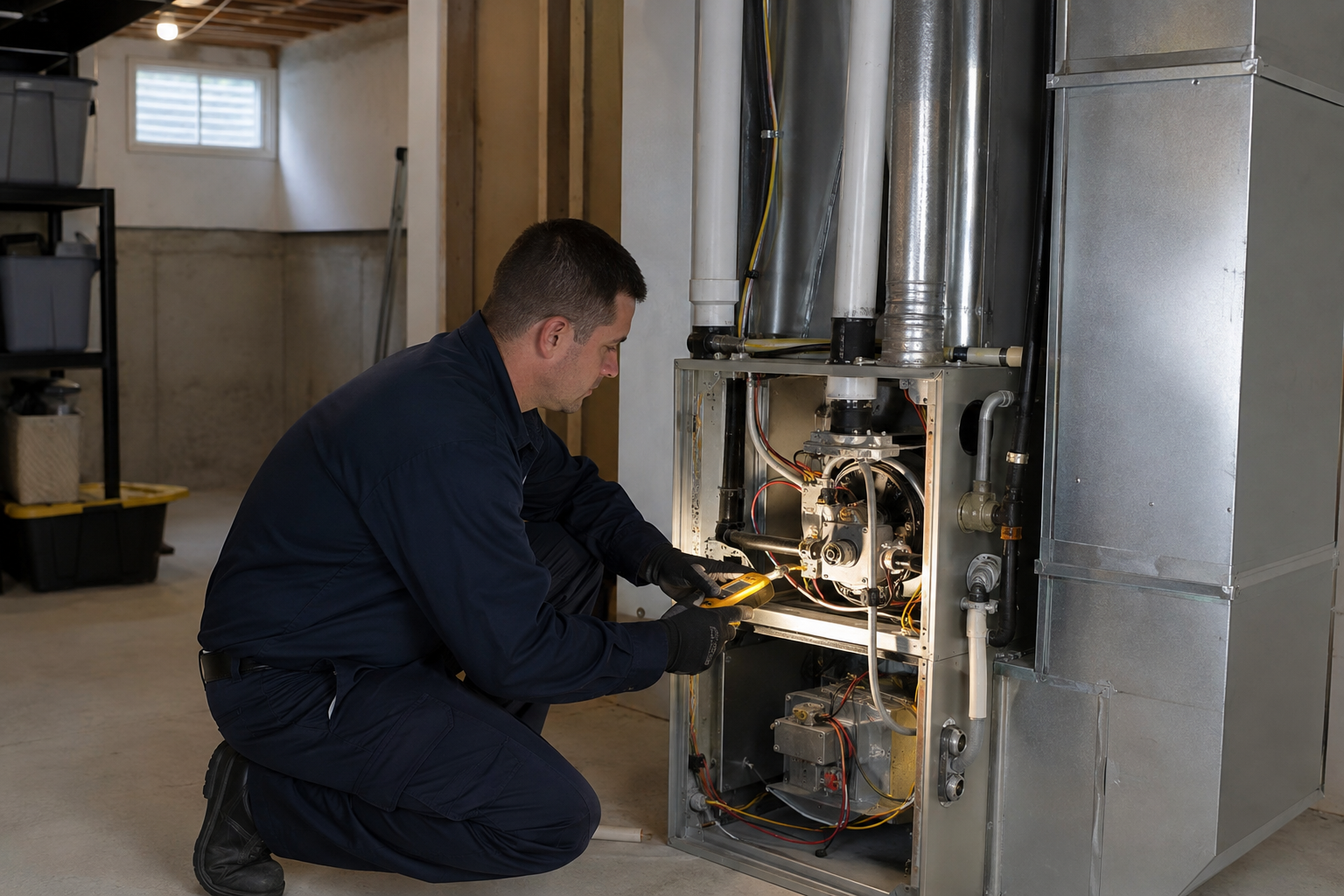
Some causes are simple, such as a thermostat setting or a clogged filter. Others involve ignition, airflow, overheating, or venting issues that should not be handled as a DIY project. Here are seven common reasons your furnace may be blowing cold air, what to watch for, and when to call Salmark HVAC.
Why This Matters
Cold Illinois winters put real pressure on heating systems. In Lemont, Homer Glen, Lockport, Romeoville, Bolingbrook, Orland Park, Mokena, Plainfield, Naperville, and Woodridge, a furnace problem can go from inconvenient to urgent quickly when temperatures drop.
When a furnace cannot produce or distribute heat properly, it may run longer without warming your space. That can lead to:
- Uneven room temperatures
- Higher utility bills
- Weak airflow from vents
- Repeated system cycling
- More wear on furnace components
- Reduced indoor comfort for your family, tenants, staff, or customers
For gas furnaces, safety also matters. A furnace that shuts down repeatedly, produces unusual odors, or triggers a carbon monoxide alarm needs immediate attention. The EPA advises annual inspection of fuel-burning appliances and proper maintenance of flues and chimneys because damaged or blocked venting can release combustion gases indoors. EPA guidance on combustion products
Ignoring the issue can turn a smaller service visit into a larger repair. Preventive maintenance does not eliminate every breakdown, but it can identify airflow, ignition, and safety concerns before the heating season is in full demand.
Furnace Blowing Cold Air — What Homeowners Need to Know
A forced-air furnace pulls cooler indoor air into the system, heats it, and sends warm air back through your ductwork. If any part of that sequence fails, you may feel cold air at the vents. AHRI explains how furnaces distribute heated air
Common Signs and Warning Signals
A furnace problem does not always begin with completely cold air. Watch for early warning signs such as:
- The furnace starts, but rooms never reach the thermostat setting
- Some vents are warm while others are cool
- Airflow feels weak
- The system turns on and off frequently
- You hear banging, rattling, squealing, or repeated clicking
- Your utility bills rise without a clear reason
- The furnace shuts down after only a short run time
- You notice burning, gas-like, musty, or unusual odors
- A carbon monoxide alarm activates
Do not ignore a carbon monoxide alarm. Leave the building, call emergency services if anyone feels ill or the alarm continues, and arrange professional inspection. Do not reset the alarm and assume the problem is solved.
1. The Thermostat Is Set Incorrectly
Start with the obvious checks. Your thermostat should be set to Heat, not Cool or Fan Only. The fan setting should normally be set to Auto.
If the fan is set to On, it can continue blowing between heating cycles. That air may feel cold even though the furnace itself is working correctly. Check the temperature setting as well: it must be higher than the current room temperature for the furnace to call for heat.
If you have a programmable or smart thermostat, review its schedule. A setback schedule, weak batteries, wiring issue, or incorrect configuration can make it appear that the furnace is failing when the problem starts at the thermostat.
2. The Air Filter Is Dirty
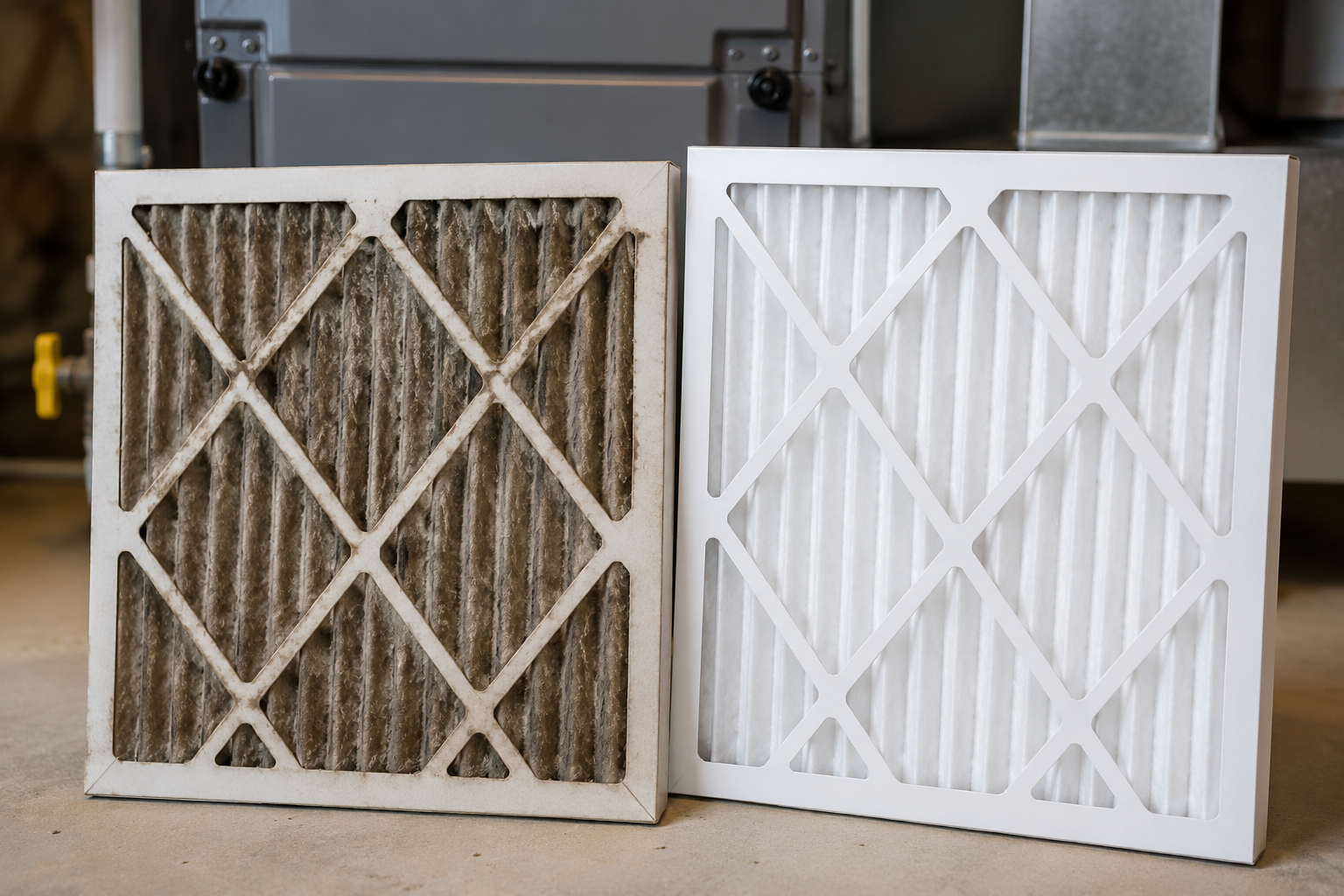
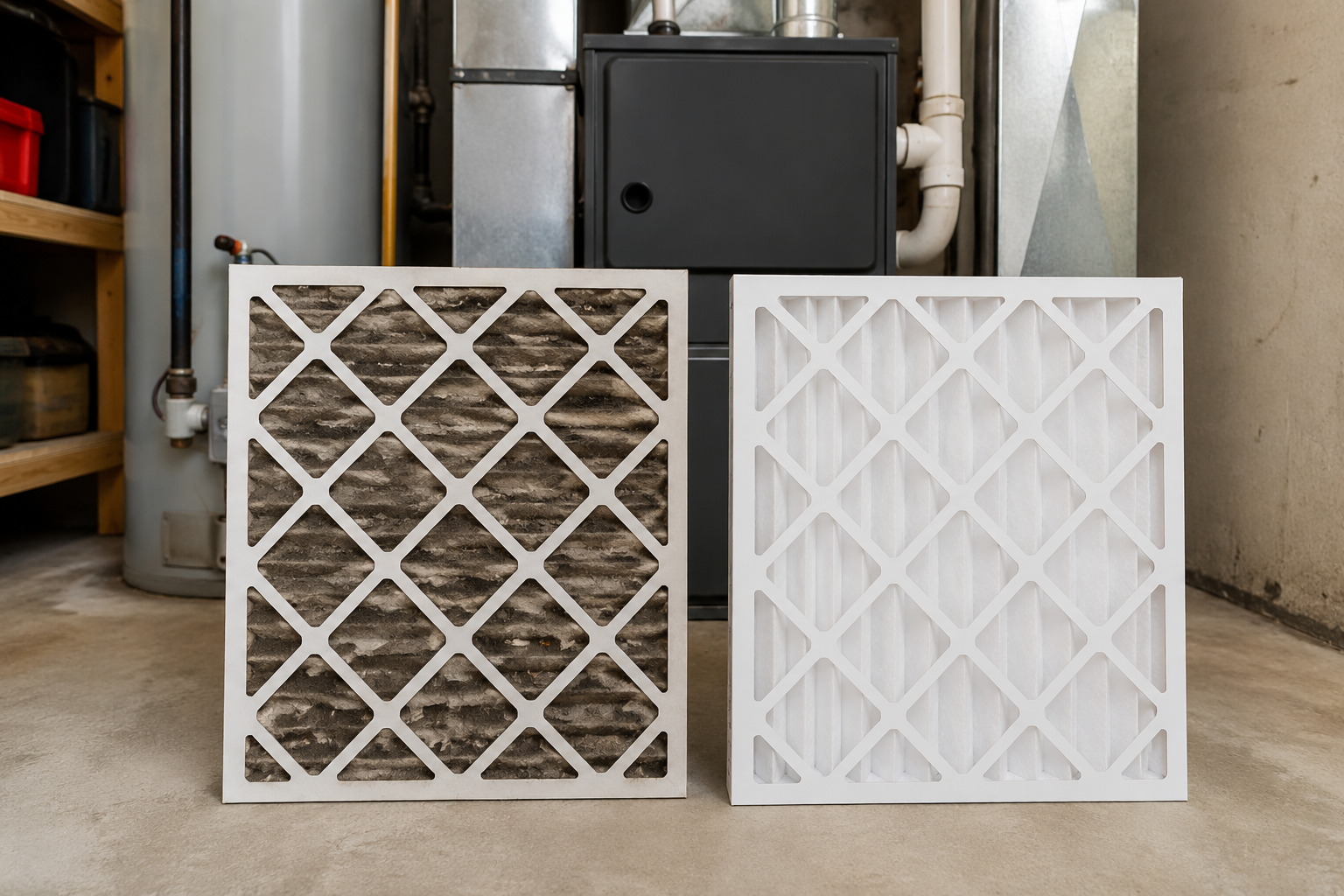
A severely dirty filter restricts airflow. The furnace may overheat and activate a safety limit switch, which can shut off the burners while the blower continues to run. The result: cold or lukewarm air from the vents.
ENERGY STAR recommends checking filters monthly and replacing them when dirty, at minimum every three months for many systems. A dirty filter can restrict airflow, waste energy, and contribute to unnecessary equipment wear. ENERGY STAR filter maintenance guidance
Use the filter size and type recommended for your system. Installing the wrong filter or putting it in backward can also reduce airflow.
3. The Pilot Light or Ignition System Has Failed
Older furnaces may use a standing pilot light. Newer systems usually use an electronic igniter. If the pilot will not stay lit or the igniter does not start the burners, the blower may still run while the furnace produces no heat.
You may hear clicking as the unit attempts to ignite. You may also notice that the furnace starts, stops, and tries again.
Do not repeatedly reset a gas furnace or attempt to repair ignition components yourself. Ignition problems can involve the flame sensor, gas valve, control board, or safety switches. A trained technician should diagnose the cause.
4. The Furnace Is Overheating
Overheating is often linked to restricted airflow, but it can also be caused by blower problems, blocked return vents, dirty internal components, or duct restrictions. The furnace’s high-limit switch is designed to shut down the burners if internal temperatures become unsafe.
The blower may continue running to cool the system. That is why you can feel cold air even though the thermostat is calling for heat.
Check that supply and return vents are open and not blocked by furniture, rugs, storage boxes, or curtains. If the issue continues after replacing a dirty filter, schedule service instead of bypassing safety controls.
5. The Flame Sensor Is Dirty or Failing
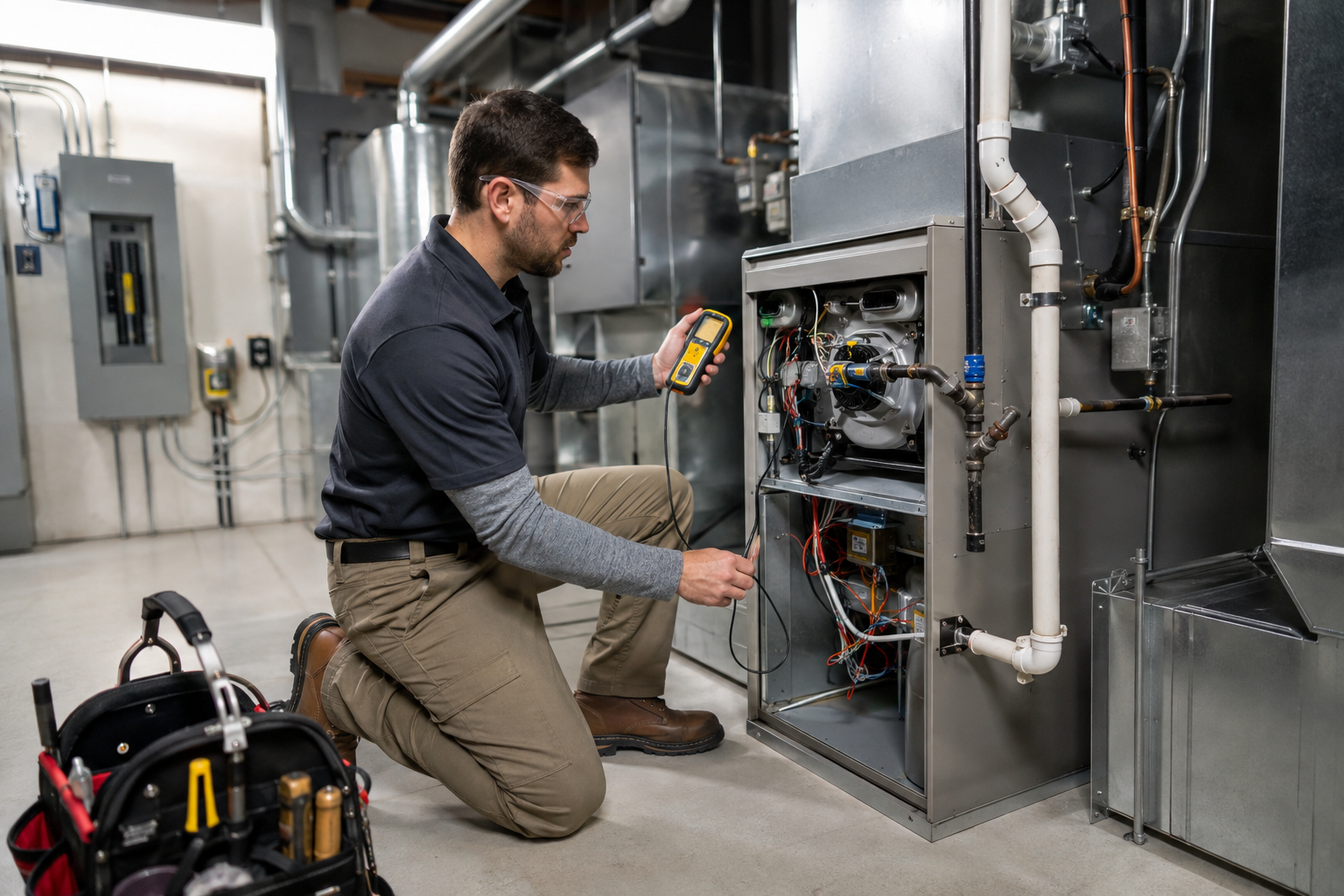
A flame sensor confirms that the burners have ignited. If it cannot detect a stable flame, the furnace may shut off the gas as a safety precaution.
A common pattern is this: the furnace starts, burners ignite briefly, then shut off within a few seconds. The blower may later push unheated air through the vents.
A dirty flame sensor is a common service issue, but accessing and cleaning furnace components incorrectly can damage parts or create safety risks. Have a technician inspect the sensor and identify whether cleaning, adjustment, or replacement is appropriate.
6. The Blower Motor or Ductwork Has a Problem
Your furnace can generate heat but still fail to deliver it properly. A weak blower motor, worn belt in certain systems, damaged blower wheel, or ductwork leak can reduce the amount of warm air reaching rooms.
Commercial properties can have similar issues in package units or rooftop systems. A business may notice cold offices, uneven temperatures across zones, or a unit that runs constantly without maintaining comfort.
Duct problems are especially easy to miss because they are often hidden in attics, basements, crawlspaces, or ceilings. A technician can check airflow, static pressure, blower performance, and accessible duct connections.
7. A Venting, Condensate, or Safety Switch Issue Is Stopping Heat Production
High-efficiency furnaces use venting and condensate drainage systems. A blocked intake or exhaust pipe, frozen condensate line, clogged drain, or pressure-switch issue can prevent safe operation.
These components are not optional. They protect the system and help ensure combustion gases move outside as intended.
If you see water around the furnace, repeated error codes, a system lockout, or a carbon monoxide alarm, stop troubleshooting and call a professional. Never tape over switches, bypass safety devices, or block vent pipes to “get heat back.”
Repair vs. Replacement
A repair often makes sense when the furnace is otherwise reliable, the issue is isolated, and replacement parts are available. Examples may include a thermostat problem, dirty sensor, ignition component, blower repair, or maintenance-related airflow issue.
Replacement may be the better long-term choice when:
- The furnace has repeated major breakdowns
- Repair costs are substantial compared with replacement value
- The heat exchanger is damaged
- The system is improperly sized for the building
- The equipment is inefficient and operating costs remain high
- Replacement parts are obsolete or difficult to obtain
There is no honest “replace at this exact age” rule. The condition of the furnace, repair history, safety findings, efficiency, and your long-term plans for the property matter more than age alone.
Prevention and Maintenance Tips
You can reduce avoidable furnace problems with a few practical habits:
- Check the air filter monthly and replace it when dirty.
- Keep supply and return vents open and clear.
- Test carbon monoxide alarms according to the manufacturer’s instructions.
- Keep the furnace area free of storage, chemicals, and clutter.
- Check exterior furnace intake and exhaust pipes for visible snow, ice, leaves, or debris during winter.
- Schedule professional furnace maintenance before consistent cold weather arrives.
- Address unusual noises, odors, or cycling early instead of waiting for a full shutdown.
Professional Recommendations
Best Practices
- Use the thermostat’s Auto fan setting unless a professional recommends otherwise.
- Avoid closing multiple vents to force heat into one room; this can disrupt airflow.
- Do not use an oven, grill, or unvented fuel-burning device to heat your home.
- Keep combustible materials away from the furnace.
- Record error codes or take a photo of the thermostat display before calling for service.
Recommended Maintenance Schedule
For most homes and small commercial properties, a professional heating inspection should be completed once per year, ideally before the heating season. Businesses with rooftop units, longer operating hours, or higher occupancy may need a more frequent maintenance plan.
A professional visit may include inspection of:
- Filters and airflow
- Burners and ignition components
- Flame sensor
- Blower operation
- Electrical connections
- Safety switches
- Venting and drainage
- Thermostat operation
- Overall heating performance
Seasonal Considerations
Spring: Schedule AC maintenance, replace filters as needed, and address any cooling issues before summer demand.
Summer: Keep outdoor AC equipment clear of debris and watch for weak airflow or rising electric bills.
Fall: This is the right time to inspect a furnace, confirm safe operation, and replace worn components before cold weather arrives.
Winter: Pay attention to cold air, frequent cycling, error codes, unusual odors, and blocked exterior vent pipes. Do not delay service when your furnace struggles to maintain heat.
Cost-Saving Tips
- Replace dirty filters before they restrict airflow.
- Use a programmable or ENERGY STAR-certified smart thermostat correctly.
- Seal obvious air leaks around doors and windows.
- Do not block vents or return grilles.
- Schedule maintenance before an emergency repair is needed.
- Ask for a system-condition assessment before deciding between repeated repairs and replacement.
When to Call an HVAC Professional
Call Salmark HVAC if:
- Your furnace is blowing cold air after basic thermostat and filter checks
- The furnace repeatedly shuts down
- You smell gas or persistent burning odors
- You hear loud banging, screeching, or repeated clicking
- Your carbon monoxide alarm activates
- You see water around the furnace
- Your business has comfort complaints across multiple rooms or zones
- Your heating bill rises while comfort gets worse
Most-Asked Questions About Furnace Blowing Cold Air
Why is my furnace blowing cold air but the thermostat is set to heat?
Check that the thermostat fan is set to Auto, the mode is set to Heat, and the temperature setting is above room temperature. If those settings are correct, possible causes include a dirty filter, ignition issue, overheating, or blower problem.
Can a dirty filter cause a furnace to blow cold air?
Yes. A dirty filter can restrict airflow and cause the furnace to overheat. The burner may shut off for safety while the blower continues running, which can make the vents feel cold.
Should I turn off my furnace if it is blowing cold air?
If there is no gas smell, no unusual odor, and no carbon monoxide alarm, you can turn the thermostat down while arranging service. If you smell gas, suspect carbon monoxide, or hear unsafe noises, leave the property and seek emergency help immediately.
Why does my furnace blow cold air only sometimes?
It may be normal fan operation if the thermostat fan is set to On. If it happens during heating cycles, intermittent ignition, overheating, sensor, thermostat, or airflow problems may be involved.
Why Choose Salmark HVAC
Salmark HVAC serves homeowners and businesses in Lemont and nearby Chicago Southwest Suburbs with practical diagnostics and HVAC service. A furnace that blows cold air needs a real diagnosis—not a guess based only on one symptom.
Our work includes furnace repair and installation, central AC, heat pumps, ductless mini-splits, rooftop and package units, water heaters, gas piping, refrigerant lines, and commercial HVAC maintenance. We assess the condition of the system, explain the issue clearly, and recommend repair or replacement based on equipment condition, safety, and long-term value.
For urgent heating, AC, water heater, disconnect, or rooftop-unit issues, prompt service matters. Preventive maintenance also helps reduce surprise breakdowns and supports comfort, safety, and energy efficiency.
If your furnace is blowing cold air, do not wait until the system fails completely. Contact Salmark HVAC for an inspection, repair, maintenance visit, emergency service, furnace replacement evaluation, commercial HVAC support, or water heater service.
Salmark HVAC
📍 Based in Lemont, IL
📧 salmarkhvac@gmail.com
📞 (630) 796-1272
🌐 salmarkhvac.com
Service Areas
Lemont, Palos Park, Orland Park, Orland Hills, Mokena, Homer Glen, Lockport, Romeoville, Bolingbrook, Plainfield, Aurora, Naperville, Lisle, Elmhurst, Villa Park, Lombard, Glen Ellyn, Wheaton, West Chicago, Oak Brook, Downers Grove, Westmont, Hinsdale, La Grange, Willowbrook, Burr Ridge, Darien, and Woodridge.



2 Responses