

Why Is My Furnace Turning On and Off Every Few Minutes? Common Causes of Furnace Short Cycling
Does your furnace turn on, run for a few minutes, shut off, and then start again shortly afterward?
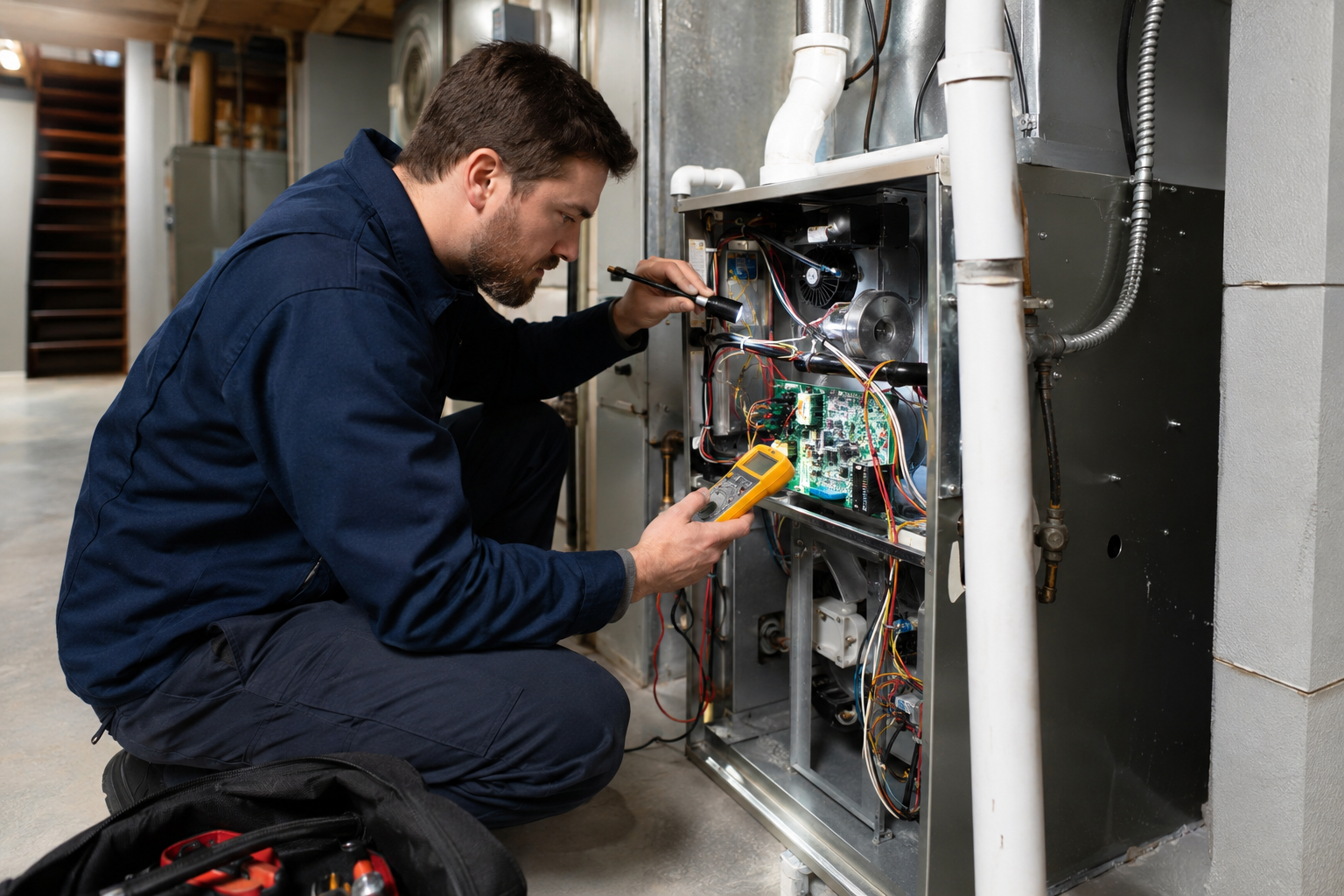
That repeated starting and stopping is commonly called furnace short cycling, and it is usually a sign that your heating system is not operating the way it should. Sometimes the cause is as simple as restricted airflow. Other times, frequent cycling points to a thermostat problem, overheating, a failing component, or a furnace that is not properly matched to the building.
For homeowners and businesses in Lemont and the Chicago Southwest Suburbs, ignoring the problem during a cold Illinois winter can quickly turn a small issue into an uncomfortable or expensive breakdown.
Here is what you should know about furnace short cycling, what you can check yourself, and when professional diagnosis makes sense.
Why Furnace Short Cycling Matters
A furnace is designed to operate in controlled heating cycles. It starts when your thermostat calls for heat, warms the space to the selected temperature, and then shuts down until more heat is needed.
When those cycles become unusually short and frequent, the system spends much more time starting and stopping.
That matters because frequent cycling can:
- Increase wear on furnace components
- Make indoor temperatures inconsistent
- Reduce heating efficiency
- Increase energy consumption
- Put additional stress on the blower motor and ignition system
- Lead to premature component failure
- Make it harder for the furnace to maintain comfortable temperatures
During winter in Lemont, Homer Glen, Lockport, Romeoville, Bolingbrook, Orland Park, Mokena, Plainfield, Naperville, and Woodridge, a heating problem can become noticeable very quickly when outdoor temperatures drop.
A furnace that cannot complete a normal heating cycle may struggle even more during extended periods of cold weather.
ENERGY STAR recommends regular HVAC maintenance that includes checking system controls, airflow, heating components, and the way equipment starts, operates, and shuts down. Regular HVAC maintenance and system checks can help identify problems before they develop into larger failures.
Furnace Short Cycling — What Homeowners Need to Know
Not every short heating cycle means your furnace is about to fail.
On mild days, heating cycles can naturally be shorter because your home requires less heat. The problem is when the furnace repeatedly turns on and off every few minutes without reaching the temperature set on the thermostat.
If the behavior is new or becoming more frequent, it is worth investigating.
Common Signs and Warning Signals
Watch for more than just the furnace turning on and off.
Other symptoms may include:
- Furnace starts and stops every few minutes
- Rooms never reach the thermostat setting
- Some areas of the house remain colder than others
- Weak airflow from supply vents
- Blower starts and stops frequently
- Furnace becomes unusually hot
- Utility bills increase without a clear reason
- New clicking, buzzing, rattling, or ignition noises
- Furnace shuts down unexpectedly
- Thermostat temperature changes unexpectedly
- Burning or unusual odors appear while the furnace is operating
A commercial heating system may show similar symptoms. Employees or tenants may complain about temperature swings, some zones may remain cold, or rooftop equipment may cycle repeatedly throughout the day.
Those symptoms should not automatically be blamed on the thermostat. HVAC systems are interconnected, and multiple problems can produce similar behavior.
Common Causes of Furnace Short Cycling
1. Dirty or Restricted Air Filter
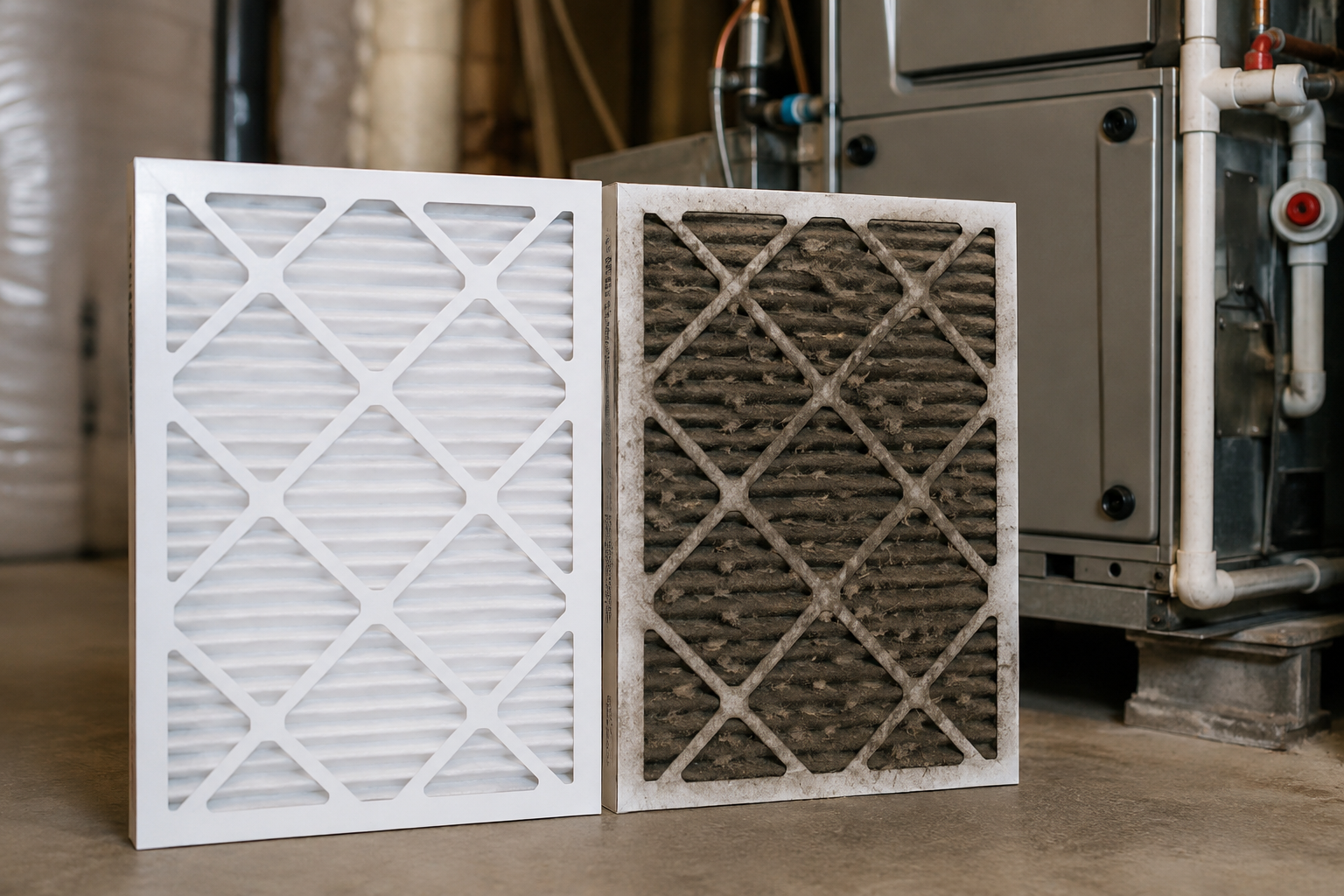
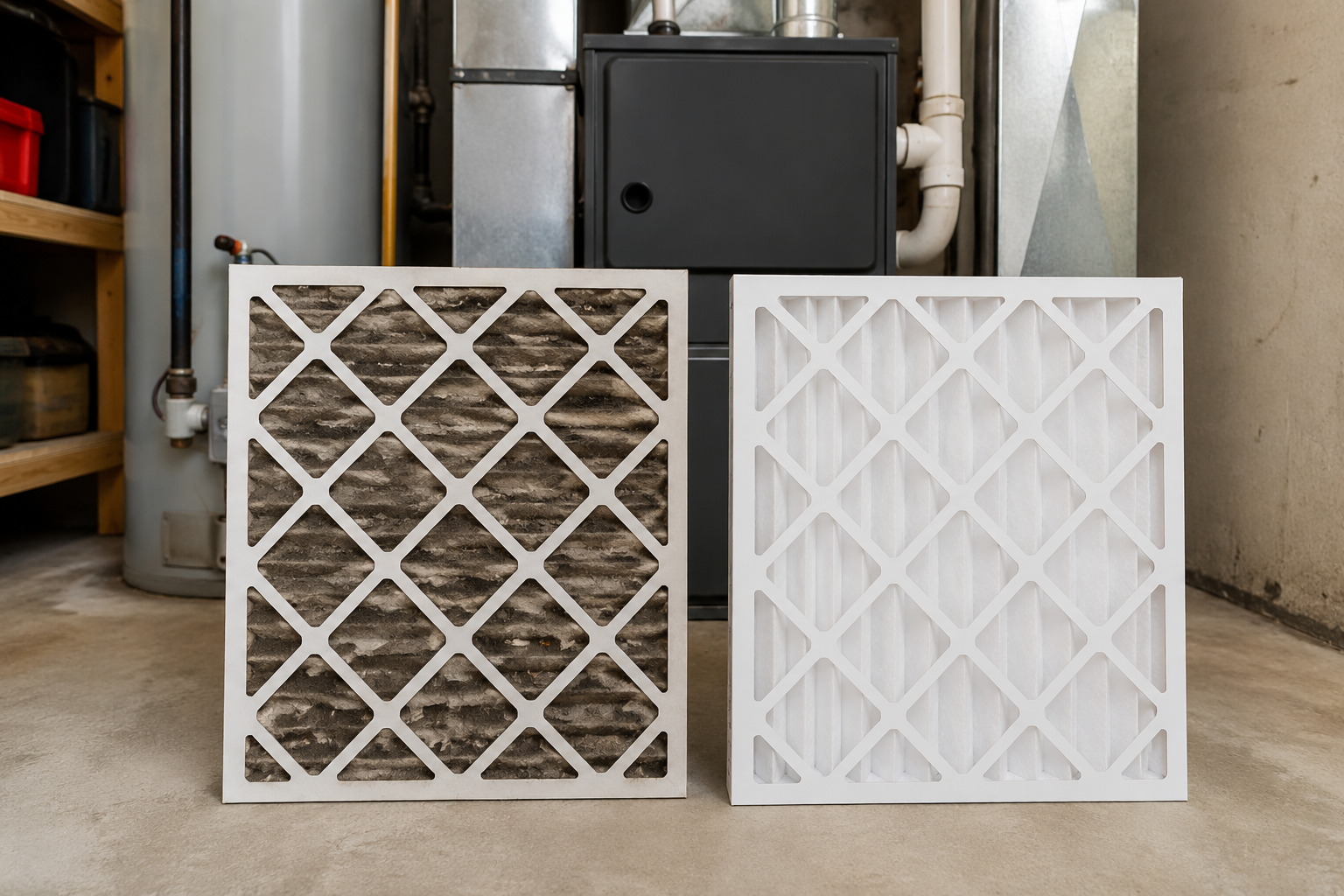
A clogged furnace filter is one of the first things worth checking.
Your furnace depends on consistent airflow. When the filter becomes heavily loaded with dust and debris, airflow through the system can decrease.
The U.S. Department of Energy explains that a dirty or clogged HVAC filter can significantly reduce airflow while increasing furnace run time, motor wear, and energy consumption. A dirty HVAC filter can restrict airflow and increase equipment stress.
Restricted airflow can contribute to overheating. When internal temperatures become too high, a furnace safety limit may shut the burners down.
Once the furnace cools, it may restart.
The result can look exactly like short cycling.
Check your filter first, but do not assume every cycling problem is caused by the filter.
2. Thermostat Problems
Your thermostat tells the furnace when heating is needed.
If the thermostat is malfunctioning, poorly located, incorrectly configured, or receiving inconsistent temperature readings, it may send incorrect signals to the furnace.
Possible problems include:
- Weak thermostat batteries
- Loose wiring
- Incorrect thermostat settings
- Faulty temperature sensors
- Thermostat installed near a heat source
- Direct sunlight affecting temperature readings
For example, a thermostat located near a supply vent may warm up faster than the rest of the house. It tells the furnace to shut down even though other rooms are still cold.
A technician can compare thermostat readings with actual room temperature and verify that the control system is communicating correctly.
3. Furnace Overheating
Modern furnaces include safety controls designed to shut equipment down when unsafe operating conditions are detected.
If airflow is restricted or certain components are not operating correctly, internal furnace temperatures can rise too high.
Possible contributors include:
- Dirty filters
- Blocked return vents
- Closed supply registers
- Dirty blower components
- Blower motor problems
- Airflow restrictions inside ductwork
Repeated overheating should not be ignored.
Simply resetting the furnace without determining why it overheated does not solve the problem.
4. Flame Sensor or Ignition Problems
Gas furnaces use safety components to confirm proper ignition and burner operation.
If the system cannot reliably verify the flame, it may shut the burners off shortly after startup.
You may notice that the furnace:
- Starts normally.
- Ignites.
- Runs briefly.
- Shuts the burners off.
- Tries again shortly afterward.
A dirty or failing flame sensor is one possible cause, but ignition problems should be diagnosed properly rather than guessed at.
Gas furnace components and combustion systems are not good candidates for random DIY experimentation.
5. Incorrect Furnace Size
A furnace that is too large for the building may heat the space very quickly and shut down before completing a normal operating cycle.
Then the temperature falls again, causing another heating call.
This repeated pattern can create comfort problems even though the furnace has plenty of heating capacity.
Proper HVAC sizing depends on much more than square footage. Insulation, windows, air leakage, ceiling height, orientation, ductwork, and local climate all affect heating demand.
If short cycling has existed since the furnace was installed, equipment sizing is one factor worth evaluating.
6. Airflow or Ductwork Problems
The furnace may be operating correctly while the air distribution system is not.
Collapsed ducts, restricted return airflow, improperly balanced ductwork, closed dampers, or other airflow problems can affect furnace performance.
This is especially common when homeowners close multiple supply vents in an attempt to save energy.
Your heating system was designed around a certain amount of airflow. Restricting too many vents can create unintended pressure and temperature problems.
7. Aging or Failing Furnace Components
Sometimes furnace short cycling is simply one symptom of an aging system.
Relays, motors, control boards, pressure switches, ignition components, and other parts can deteriorate over time.
That does not automatically mean you need a new furnace.
A proper diagnostic should identify the failed component before anyone recommends replacement.
Repair vs. Replacement
Short cycling alone does not mean your furnace needs to be replaced.
Repair often makes sense when:
- The furnace is otherwise in good condition
- The problem involves a serviceable component
- The repair cost is reasonable
- The system has been properly maintained
- Heating performance was good before the problem appeared
Replacement becomes more reasonable when:
- The furnace requires frequent repairs
- Major components are failing
- The system is significantly oversized or undersized
- Energy costs remain high despite repairs
- Comfort problems continue
- Replacement parts are becoming difficult or expensive to obtain
- The equipment is approaching the end of its practical service life
A technician should evaluate the actual system condition instead of recommending replacement based only on age.
Salmark HVAC provides furnace installation, repair, troubleshooting, and maintenance services for residential and commercial heating systems throughout the Chicago area.
Prevention and Maintenance Tips
You cannot prevent every furnace problem, but basic maintenance can reduce the risk of short cycling and unexpected breakdowns.
Start with these steps:
- Check your furnace filter regularly
- Replace dirty filters
- Keep return air vents unobstructed
- Avoid closing large numbers of supply vents
- Keep the furnace area clear
- Pay attention to unusual noises or odors
- Watch for unexplained changes in energy bills
- Schedule heating maintenance before winter
- Do not repeatedly reset a furnace that keeps shutting down
Filter selection also matters.
EPA explains that MERV ratings describe how effectively HVAC filters capture different particle sizes. Higher filtration is not automatically better for every furnace because the system must be able to handle the filter’s airflow resistance. Choose an HVAC filter that your system can properly accommodate.
If you are unsure which filter is appropriate, check the equipment specifications or ask an HVAC technician.
Professional Recommendations
Best Practices
When troubleshooting frequent furnace cycling, start with the simple things but do not keep guessing if the problem continues.
A good sequence is:
- Confirm the thermostat is set correctly.
- Check the furnace filter.
- Make sure supply and return vents are open.
- Observe how long the furnace operates before shutting down.
- Note unusual sounds, smells, or warning codes.
- Contact an HVAC professional if the behavior continues.
Diagnostic information helps technicians reproduce the problem faster.
For example, telling the technician, “The burners run for about three minutes and then shut off, but the blower continues,” is much more useful than simply saying, “The furnace is acting weird.”
Although, admittedly, furnaces do seem to specialize in acting weird at 2 a.m. in January.
Recommended Maintenance Schedule
Most residential heating systems should receive professional maintenance at least once per year, ideally before the main heating season.
A professional furnace inspection may include:
- Checking system startup and shutdown
- Inspecting burners and ignition components
- Testing safety controls
- Inspecting electrical connections
- Checking blower operation
- Evaluating airflow
- Inspecting the filter
- Checking thermostat operation
- Looking for visible signs of wear or overheating
Commercial systems may require more frequent service depending on operating hours, equipment type, building use, and manufacturer requirements.
Salmark also provides commercial HVAC maintenance and rooftop unit services for offices, retail spaces, restaurants, and other commercial properties.
Seasonal Considerations
Spring
Spring is a good time to prepare your cooling system before heavy summer demand begins.
Summer
Pay attention to long AC run times, poor airflow, unusual noises, and rising cooling costs.
Fall
Fall is the ideal time to inspect your furnace before consistent heating demand begins.
Starting the furnace before the first major cold spell gives you time to identify problems while emergency service demand is lower.
Winter
During freezing Chicago-area weather, changes in furnace cycling should be taken seriously.
A system that struggles during moderate weather may fail completely when heating demand increases.
Cost-Saving Tips
Preventive maintenance is usually less disruptive than emergency repair.
To reduce unnecessary heating costs:
- Replace dirty filters before airflow becomes restricted
- Use reasonable thermostat settings
- Avoid blocking return vents with furniture
- Have persistent airflow problems inspected
- Address short cycling early
- Keep heating equipment maintained
- Repair small problems before they damage additional components
Do not focus only on the monthly utility bill.
Efficiency, comfort, reliability, and equipment life are connected.
When to Call an HVAC Professional
Schedule professional service when:
- Your furnace repeatedly turns on and off every few minutes
- Replacing a dirty filter does not solve the problem
- The furnace overheats
- Burners shut down shortly after ignition
- You hear new mechanical or electrical noises
- The furnace produces unusual odors
- Your thermostat behaves unpredictably
- Rooms remain cold despite frequent furnace operation
- The system repeatedly locks out or requires resetting
- You suspect an electrical, combustion, or gas-related problem
If your furnace stops heating completely during cold weather, professional diagnosis should not be delayed.
You can schedule HVAC service with Salmark HVAC for heating diagnostics, repairs, maintenance, and emergency HVAC problems.
Most-Asked Questions About Furnace Short Cycling
Why does my furnace turn on and off every few minutes?
Common causes include restricted airflow, a dirty filter, thermostat problems, furnace overheating, ignition issues, or an incorrectly sized heating system.
If the furnace repeatedly cycles without reaching the thermostat setting, schedule an HVAC inspection.
Can a dirty filter cause furnace short cycling?
Yes. A heavily clogged filter can restrict airflow through the furnace.
Restricted airflow may contribute to overheating and cause furnace safety controls to shut the heating cycle down prematurely.
Is furnace short cycling dangerous?
Short cycling is not always immediately dangerous, but it should not be ignored.
If the furnace is overheating, experiencing ignition problems, or repeatedly triggering safety controls, professional diagnosis is recommended.
How long should a furnace normally run before shutting off?
There is no universal cycle length because run time depends on outdoor temperature, insulation, thermostat settings, furnace capacity, and the heating needs of the building.
The important warning sign is a significant change in normal operation, especially repeated cycles lasting only a few minutes without reaching the desired indoor temperature.
Why Choose Salmark HVAC
A short-cycling furnace can have several possible causes, which is why correct diagnosis matters more than replacing parts at random.
Salmark HVAC is based in Lemont and provides residential and commercial HVAC service throughout Chicago and surrounding communities.
The team works with:
- Furnaces
- Central air conditioning
- Heat pumps
- Ductless mini-split systems
- Radiant heating
- Rooftop and package units
- Commercial HVAC systems
- Conventional and tankless water heaters
- Gas and refrigerant piping
For furnace problems, the goal is to identify why the system is cycling incorrectly before recommending a repair or replacement.
That may mean correcting airflow, repairing a control component, performing maintenance, or discussing replacement when the existing equipment no longer makes financial or practical sense.
Preventive maintenance can also help identify deteriorating components before they cause a no-heat emergency.
Stop Furnace Short Cycling Before It Becomes a Breakdown
If your furnace keeps turning on and off every few minutes, do not wait until it stops heating completely.
Check the thermostat and filter first. If the problem continues, an HVAC inspection can determine whether the issue is related to airflow, controls, ignition, overheating, equipment sizing, or another mechanical problem.
Salmark HVAC provides furnace inspections, maintenance, repairs, emergency HVAC service, system replacement, commercial HVAC support, and water heater services throughout Lemont and surrounding Chicago suburbs.
Salmark HVAC
📍 Based in Lemont, IL
📧 salmarkhvac@gmail.com
📞 (630) 796-1272
🌐 salmarkhvac.com
Service Areas
Lemont, Palos Park, Orland Park, Orland Hills, Mokena, Homer Glen, Lockport, Romeoville, Bolingbrook, Plainfield, Aurora, Naperville, Lisle, Elmhurst, Villa Park, Lombard, Glen Ellyn, Wheaton, West Chicago, Oak Brook, Downers Grove, Westmont, Hinsdale, La Grange, Willowbrook, Burr Ridge, Darien, and Woodridge.



One Response